Walk through any warehouse that is starting to feel the strain, and you will usually spot the same thing. People carrying boxes from one end of the floor to the other.
It looks harmless. It is not. Manual movement is slow, it ties up labour that could be doing skilled work, and it quietly caps how much volume the floor can handle in a shift. For most growing operations, the conveyor system is the first piece of automation that pays for itself, because it removes that manual movement without asking the team to relearn how they work.
This guide covers what a conveyor system is, the main types in use today, and how to think about which one fits your operation.
What Is a Conveyor System?
A conveyor system is equipment that moves goods automatically along a fixed path, from receiving to storage, from picking to packing, or from the packing line out to the dispatch dock. Instead of a person carrying each item, the conveyor does the transport while the team handles the work that actually needs judgement.
On This Page
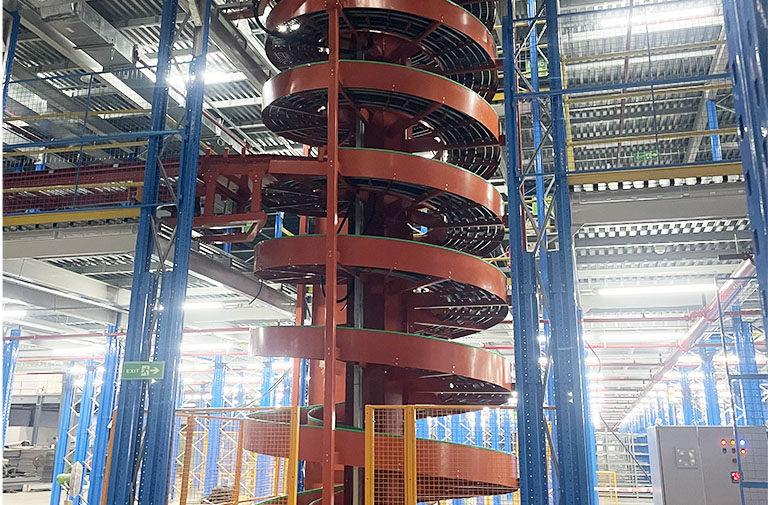 Conveyors are the backbone of almost every automated warehouse. They connect zones, feed sortation lines, and load and unload trucks. Most operations do not buy one conveyor. They build a network of them, matched to the shape and weight of what they move.
What Are the Main Types of Conveyor Systems?
There is no single best conveyor. The right choice depends on the product, the distance, the speed you need, and the floor you are working with. Here are the types you are most likely to use.
Belt Conveyor. A continuous belt running over rollers or a flat bed. Belt conveyors handle a wide range of items, including small parcels, polybags, and irregular shapes that would fall between rollers. They are the most common general-purpose conveyor on a warehouse floor.
Roller Conveyor. A series of rollers set in a frame. Gravity roller conveyors use a slight downward slope to let cartons move on their own, with no power needed, which makes them cheap and reliable for short runs and packing stations. Powered (motorised) roller conveyors drive the rollers themselves, giving you control over speed and spacing for longer, busier lines.
Modular Belt Conveyor. A belt made of interlocking plastic modules rather than a single sheet. It handles curves, inclines, and washdown environments better than a standard belt, which is why it shows up in food, grocery, and FMCG operations.
Flexible and Expandable Conveyor. An extendable roller or skatewheel conveyor that pulls out, flexes around obstacles, and pushes back when not in use. It is built for loading and unloading bays where the work moves around and a fixed line would get in the way.
Telescopic and Truck Loading Conveyor. A conveyor that extends straight into the back of a trailer or container so the team can load and unload at the point of work instead of carrying cartons across the dock. For high-volume dispatch operations, this single change often removes the worst bottleneck in the building.
Vertical Conveyor. When goods need to move between floors or levels, a vertical reciprocating conveyor or continuous vertical lift carries them up and down without a forklift or a manual lift. It saves floor space and removes a slow, risky manual step.
Overhead Conveyor. A conveyor that runs above the floor, freeing up ground space for other work. Common where floor area is tight and product can hang or sit on overhead carriers.
Powered or Gravity: Which One Do You Need?
This is the question that decides cost on most projects. Gravity conveyors have no motors, cost less, and work well for short distances, packing benches, and accumulation at the end of a line. They depend on slope and on someone giving cartons a push when they stall.
Powered conveyors cost more but give you control. You set the speed, you meter the flow, and you can connect them to scanning, weighing, and sortation downstream. As volume rises and timing starts to matter, powered lines usually earn their keep. Many operations run a mix, using gravity where it is enough and power where flow and timing matter.
When Does a Warehouse Actually Need a Conveyor System?
The signal is rarely a grand strategy. It is usually one of these:
- Staff spend a large part of the shift walking goods from one area to another
- Truck loading and unloading is the slowest step in your dispatch cycle
- Throughput stalls during peak even when you add people
- Product gets damaged or lost while being moved by hand
- You are about to feed a sortation or packing line that needs a steady, controlled flow
If two or more of those sound familiar, a conveyor system is usually the lowest-risk place to start automating. It is well understood, it deploys quickly, and the team adapts to it fast.
NIDO designs and builds a full range of conveyor automation systems, from belt and roller lines to telescopic truck loading and vertical conveyors, matched to your product mix and your floor. If you are weighing automation more broadly, our guide on what warehouse automation actually involves is a useful next read.
Frequently Asked Questions
NIDO Automation is India’s end-to-end intralogistics automation partner. From conveyor systems and sortation to AMRs, packaging automation, and WMS integration, we build solutions for operations of every scale. Visit nidoworld.com to learn more.